THE SILVER GARDEN
2019
Lifejacket, whistle, resin putty, silver nitrate chrome coating, steel bracket, screws
72 x 28 x 31 cm
Pavona Frondifera
2020
Aluminium, rivets, lifejacket, foam, resin, silver nitrate chrome coating
24 x 20 x 20 cm
Aplysina Fistularis
2020
Aluminium, rivets, lifejacket parts, resin, silver nitrate chrome coating
25 x 25 x 25 cm
Caulastraea
2020
Aluminium, rivets, lifejacket parts, resin, silver nitrate chrome coating
30 x 26 x 18 cm
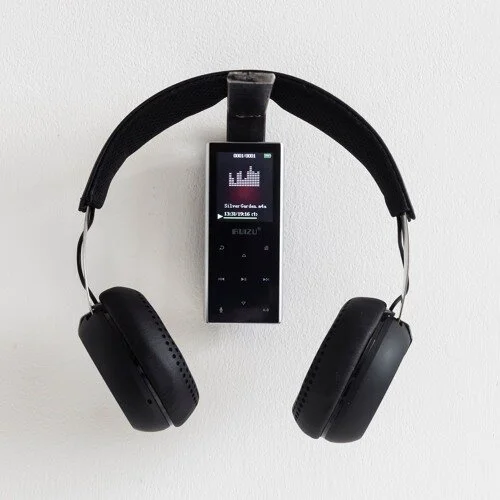
2019
Headphones, mp3 player, steel mount
72 x 60 x 31 cm
Music composed and played by David Barbenel
Written and read by Richard Nik Evans
The Silver Garden is a reflective exploration of environment, commerce, and narrative, in which aesthetics of the supernatural emerge as a consequence of human activity. The work unites narrative sound and sculptural form, creating an installation in which human presence, technology, and nature converge, haunted by the traces of environmental and social collapse.
Entering the gallery, visitors encounter four chromed, distorted mirror-like sculptures that at first glance seem to camouflage themselves against the white walls. On one wall, a child’s lifejacket hangs, its whistle dangling portentously. In the corner, three coral-like forms rest on geometric steel plinths.
The main sculpture (life/jacket) began as a child’s lifejacket, found on Dungeness beach in the UK in early 2018. Frozen—literally and figuratively—through layers of varnish and resin, then industrially polychromed to have a reflective metallic surface, it hangs suspended and pierced by a steel rod. The lifejacket becomes a mercurial symbol: a body reimagined, immobilized, and memorialized.
The smaller coral-like forms—Pavona frondifera, Aplysina fistularis, and Caulastraea, named after near-extinct coral—are made with the same polychrome technique. They recall bleaching and environmental fragility. Growth arrested by chemistry, nature frozen by technological destruction.
These works relate to the body as a symbol of survival and as ghostly memorials to the past. Their mirrored surfaces act as pools, reflecting the viewer while recalling Ballardian landscapes—Terminal Beaches with frozen sculptures and apocalyptic environments shaped by human and technological forces. These end beaches, the ultimate destinations of ecological collapse, reflect the consequences of our treatment of the environment. Industrial processes override natural growth, creating an uncanny tension between life and material preservation.
Embedded within this aesthetic is a political and humanitarian resonance. The child’s lifejacket evokes migration, loss, and displacement, functioning as a monument to the refugee crisis in the Mediterranean. Shown at Aetopolous Gallery in Athens, the work engages an uneasy dialogue between European leisure, the tourist gaze, and the urgent need for survival for those adrift or stranded at sea. The sculptures speak to a world in which human desire for commerce and consumption has produced environmental fragility, social displacement, and landscapes haunted by what we have destroyed.
In parallel, the sound work The Silver Garden, written and read by Richard Nik Evans, extends these themes into an auditory environment. Disparate sounds—acoustic, electronic, and field recordings—appear as if from nowhere, gradually assembling a mental image of a tourist ferry moving through the Greek Islands at night. Field recordings made aboard ferries merge with processed voice, drones, and fragments of cello improvisation by David Barbenell to create an intricate, illusionistic space that mirrors the suspended, reflective qualities of the sculptures.
The protagonist’s voice guides the listener through the ship, describing a supernatural event in which character and weather begin to merge. A vampiric presence drifts through the ferry, observing the vessel’s somnambulist inhabitants, suspended in a sleeping dream. The entity notices that the poses of these tourists unconsciously echo the compositions of ancient paintings and sculptures. When this occurs, the presence enters them. They breathe it in, and through inhabiting their bodies, the creature moves through time.
The work begins with the distant call of a foghorn, gradually becoming a slow countdown to the moment of possession. The voice dissolves through echo, delay, and layering into something ghost-like, fog-like, inhaled by the sleeping passengers. Contemporary surfaces—bags, headphones, and T-shirts—surround the figures, emphasizing the tension between human aspiration, consumption, and vulnerability. Barbenell’s cello samples, improvised in response to the text, are fragmented, layered, and looped to emulate the movement of waves. They gradually accumulate, suggesting an approaching storm.
Voice, cello, and ambient recordings merge into a dense field, marking the moment of transformation as the presence dissolves back into mist. Together with the sculptures, the work evokes a world in which bodies, oceans, and societies are caught at the intersection of technology, vulnerability, environmental collapse, and human desire. The Silver Garden traces a trajectory from classical figuration toward a speculative, frozen future. Natural systems are arrested, survival is precarious, and landscapes are haunted by the consequences of human activity. It is both memorial and warning: reflective, chromed, and horrific, a space in which the traces of bodies, oceans, migration, and environmental fragility converge, and where our desire for commerce and spectacle meets inevitable consequence.