C.A.G.E.
2013
HD video (colour, sound)
20 mins 34 seconds
2013
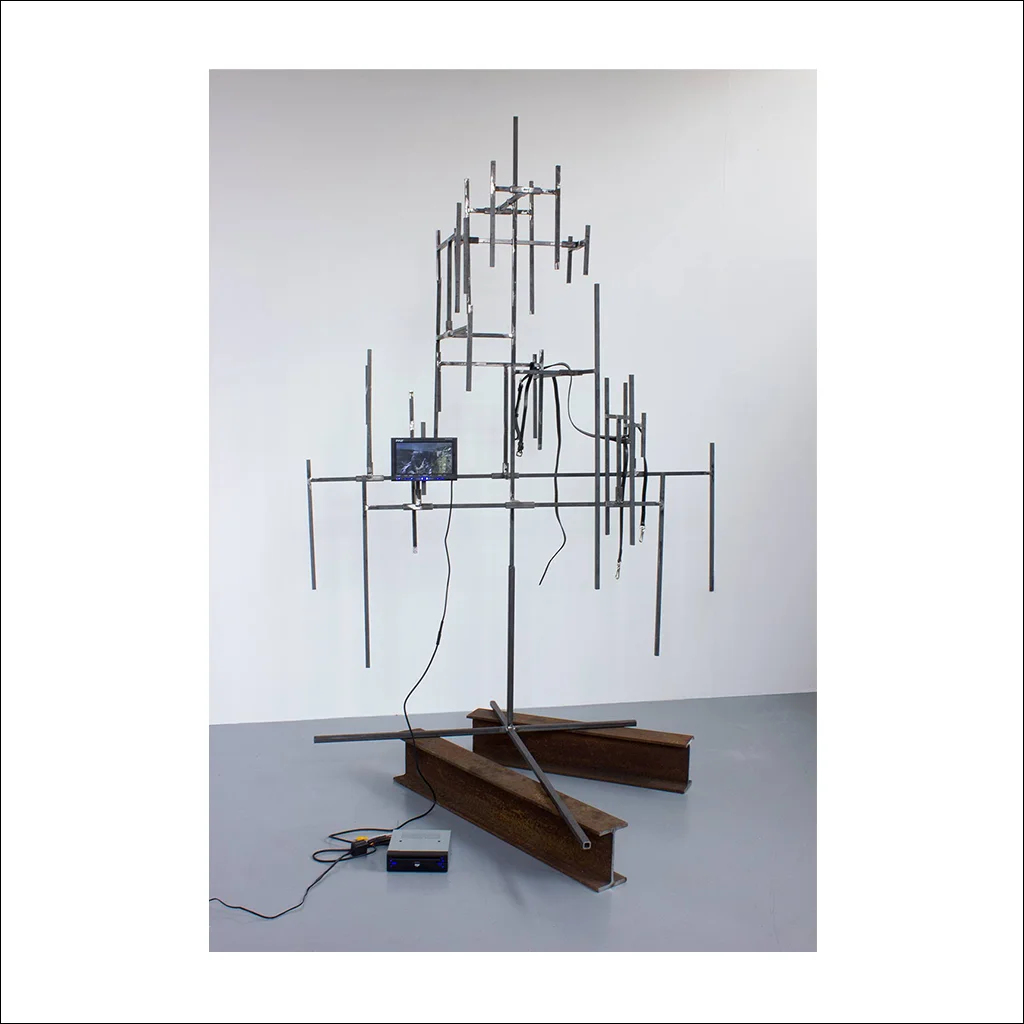
Steel, horse martingale, monitor, headrest DVD player, lacquer, wax, HD video (colour, no sound) (looped, inverted video of The Narrows Gorge, Zion National Park)
208 x 183 x 145 cm
2012
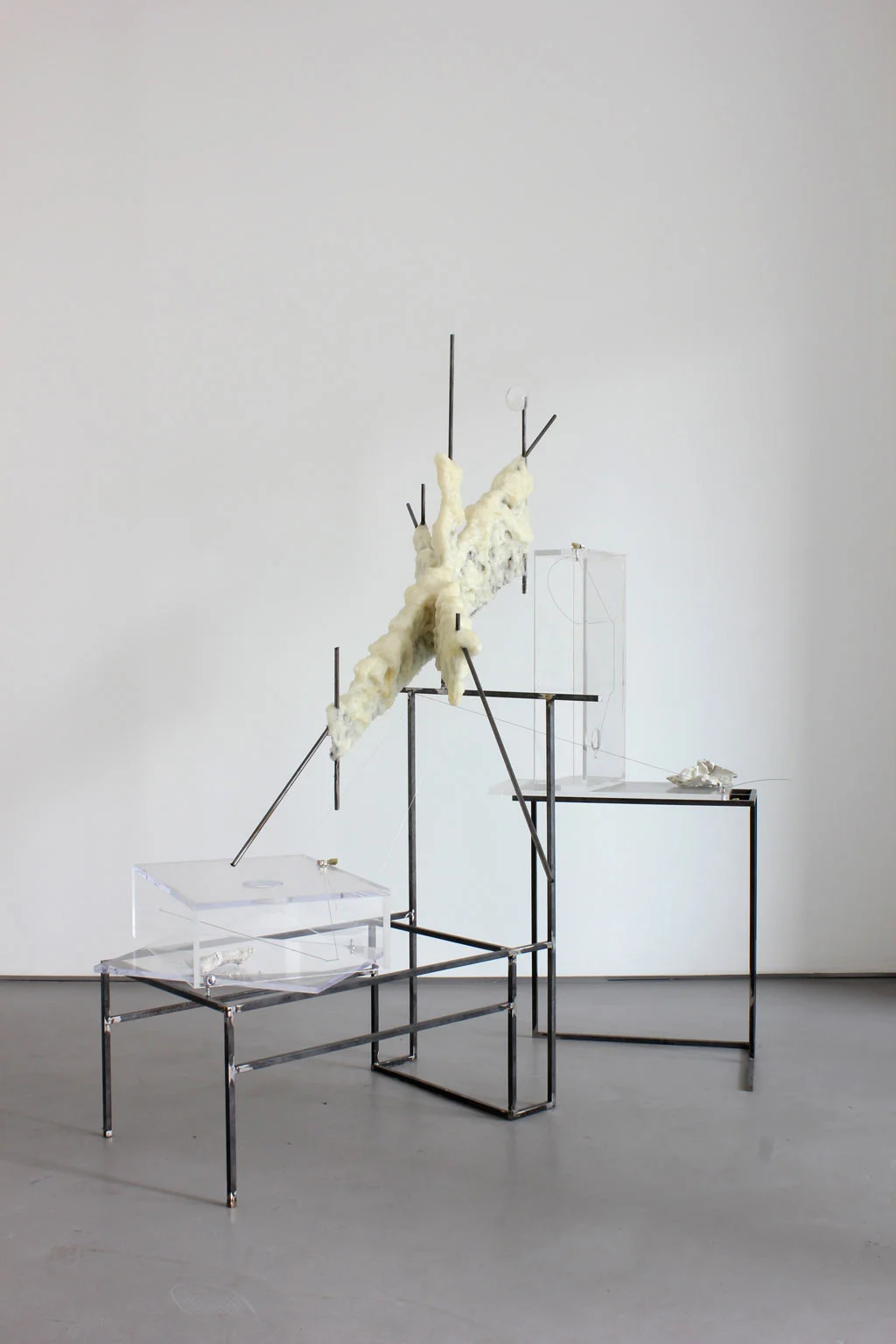
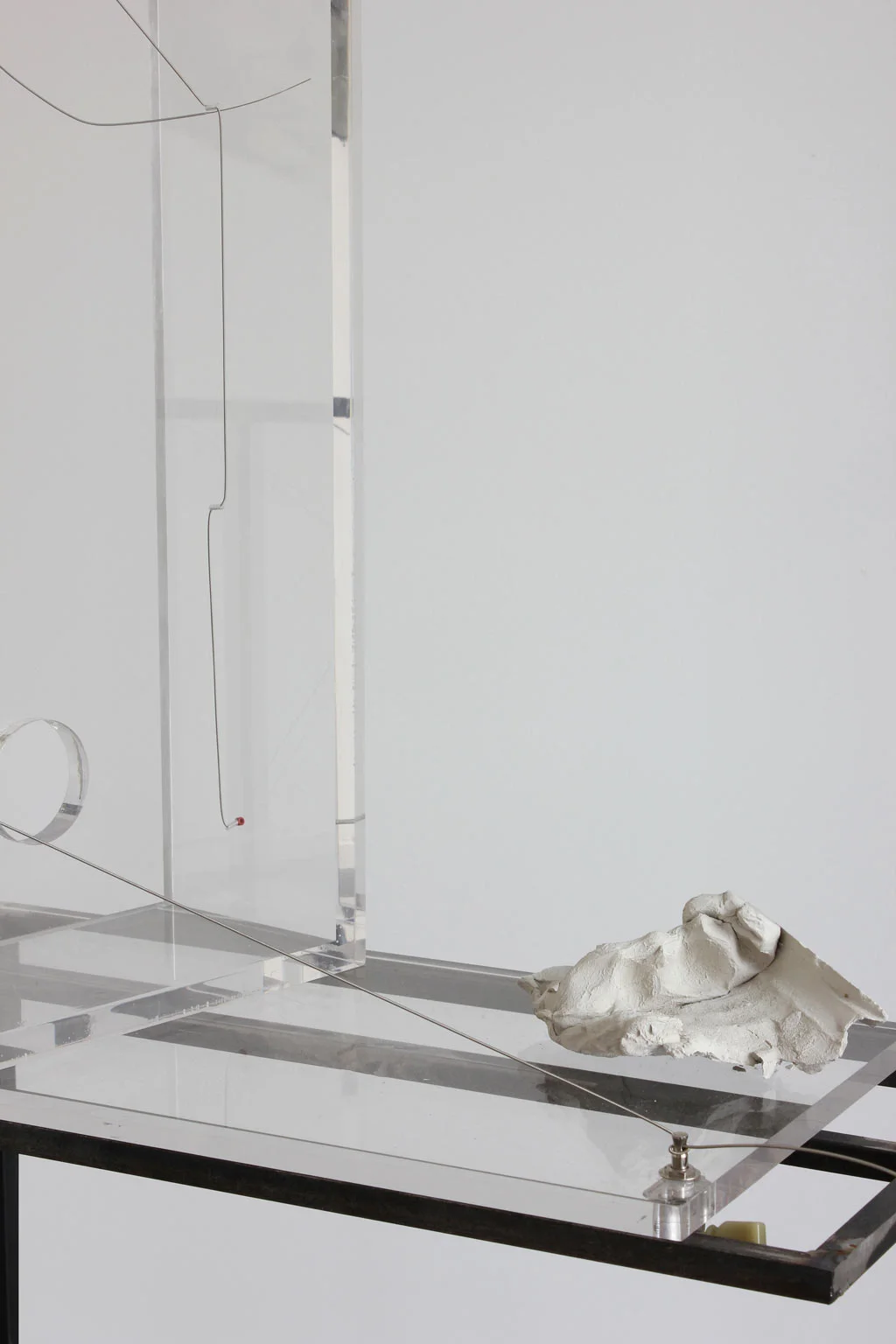
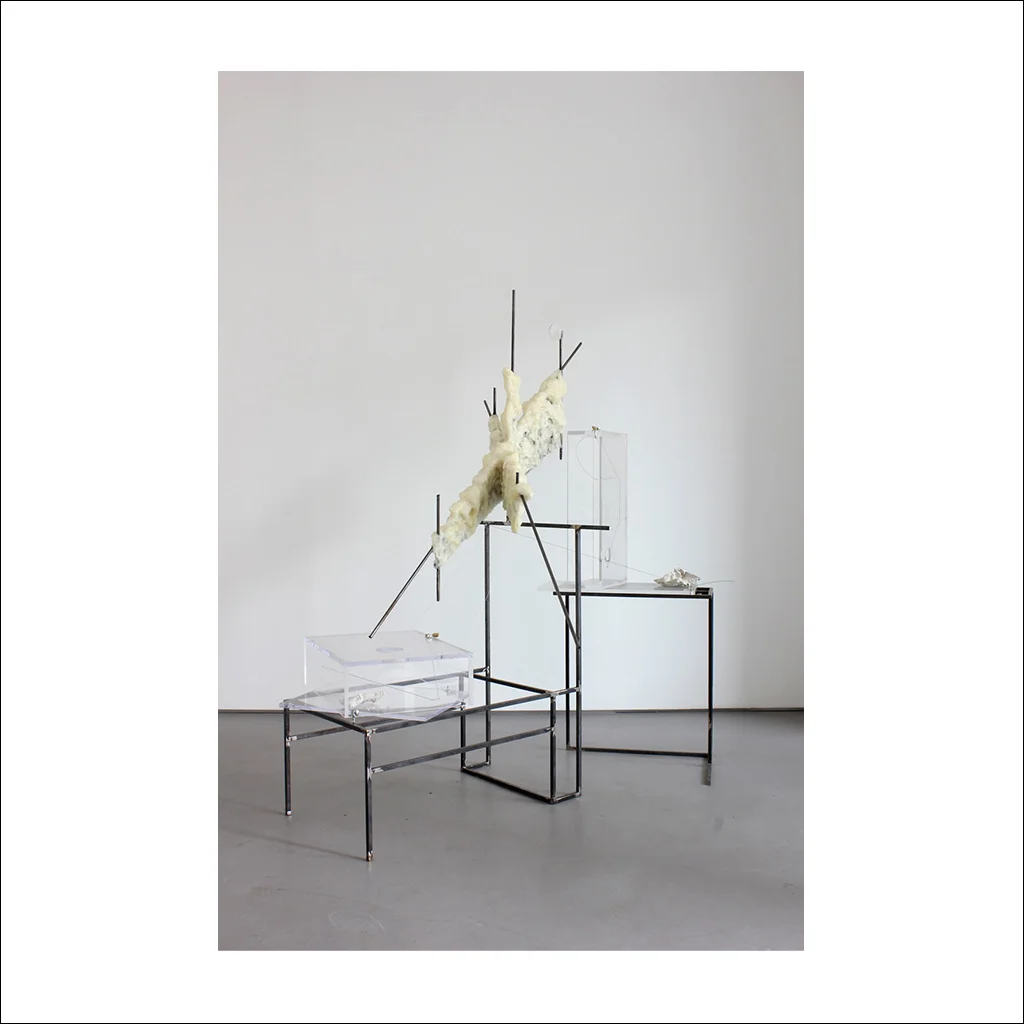
Bees wax, salt (collected from Badwater Basin, Death Valley), rubberised upholstery coir, clay, resin, steel, Perspex, guitar strings, guitar tuners, lacquer, wax
170 x 142 x 114 cm
2012
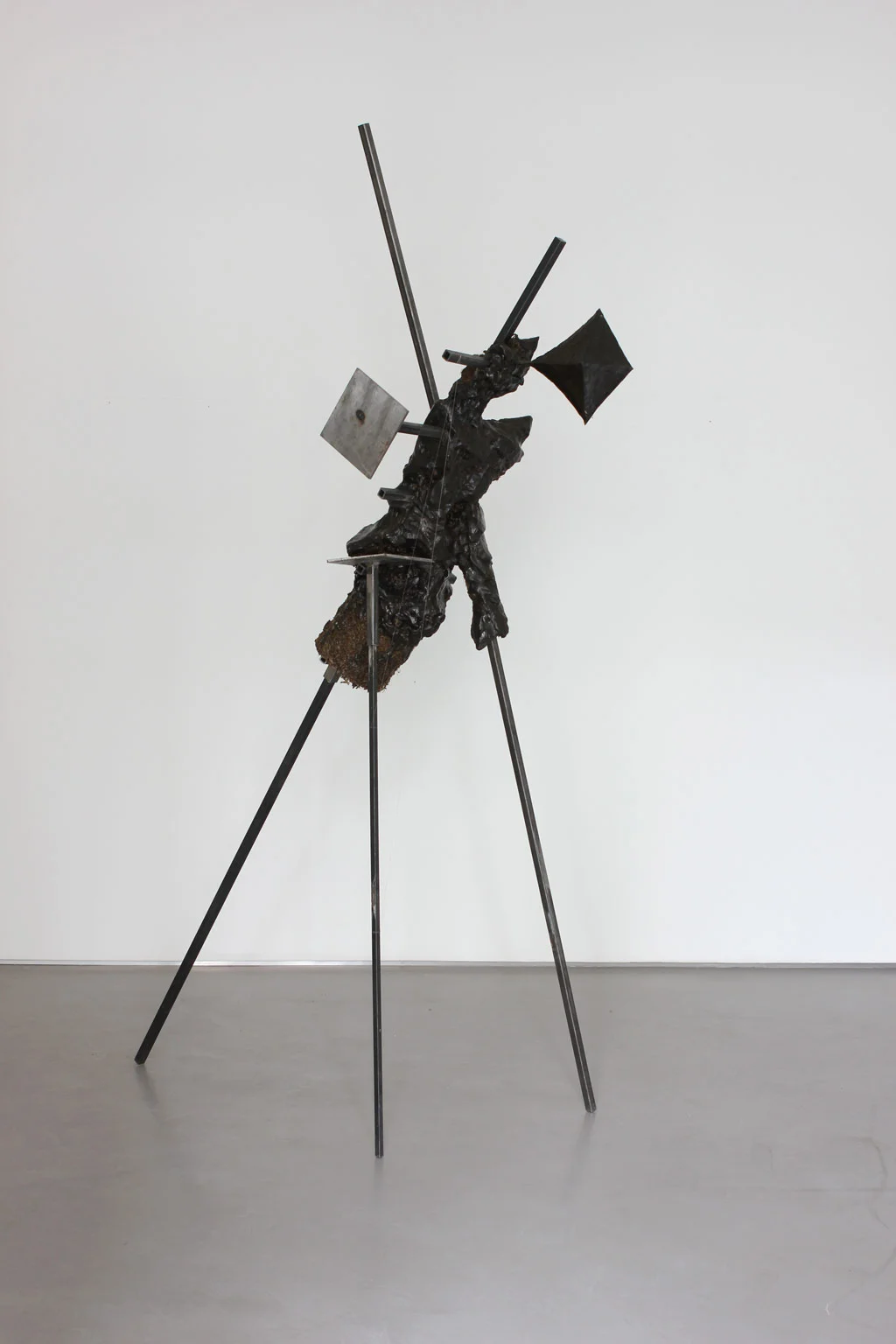
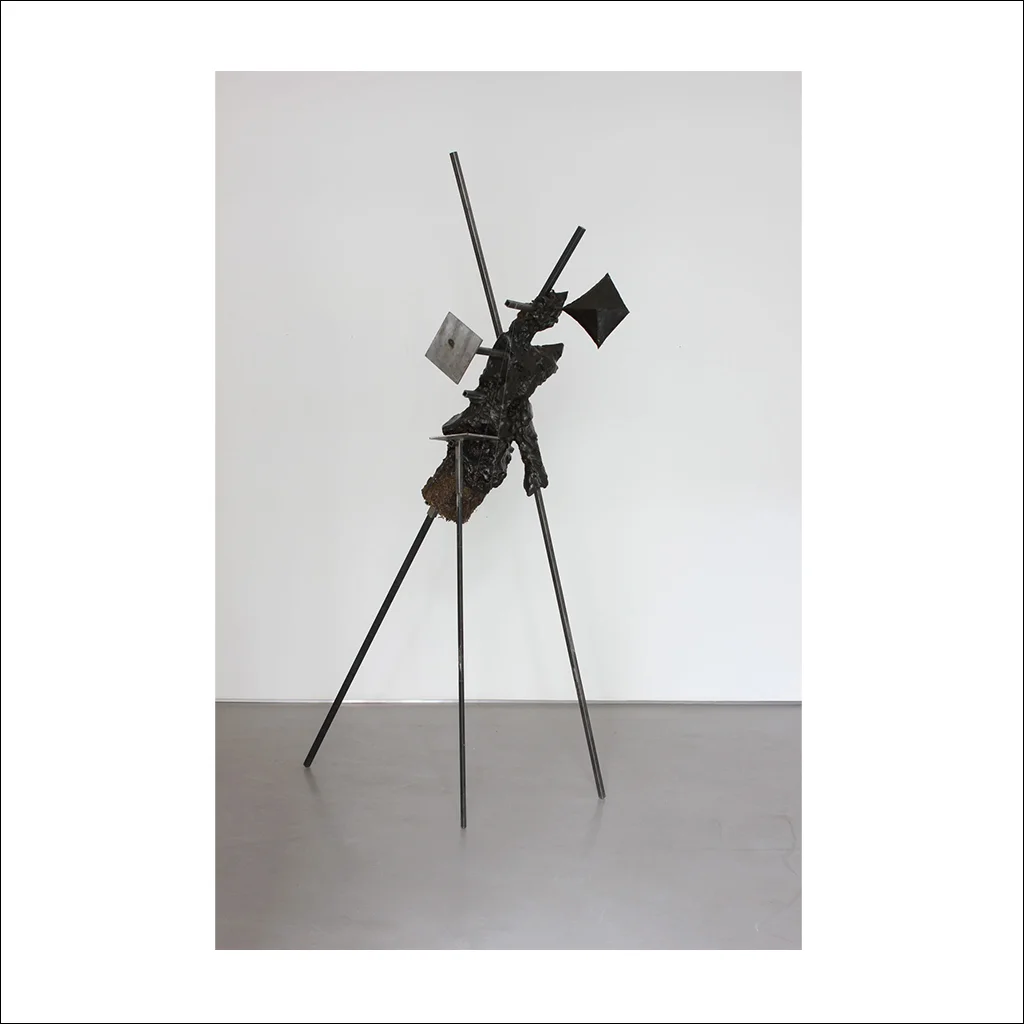
Wax, rubberised upholstery coir, steel, fishing weights, thread, lacquer, wax
76 x 98 x 35 cm
2013
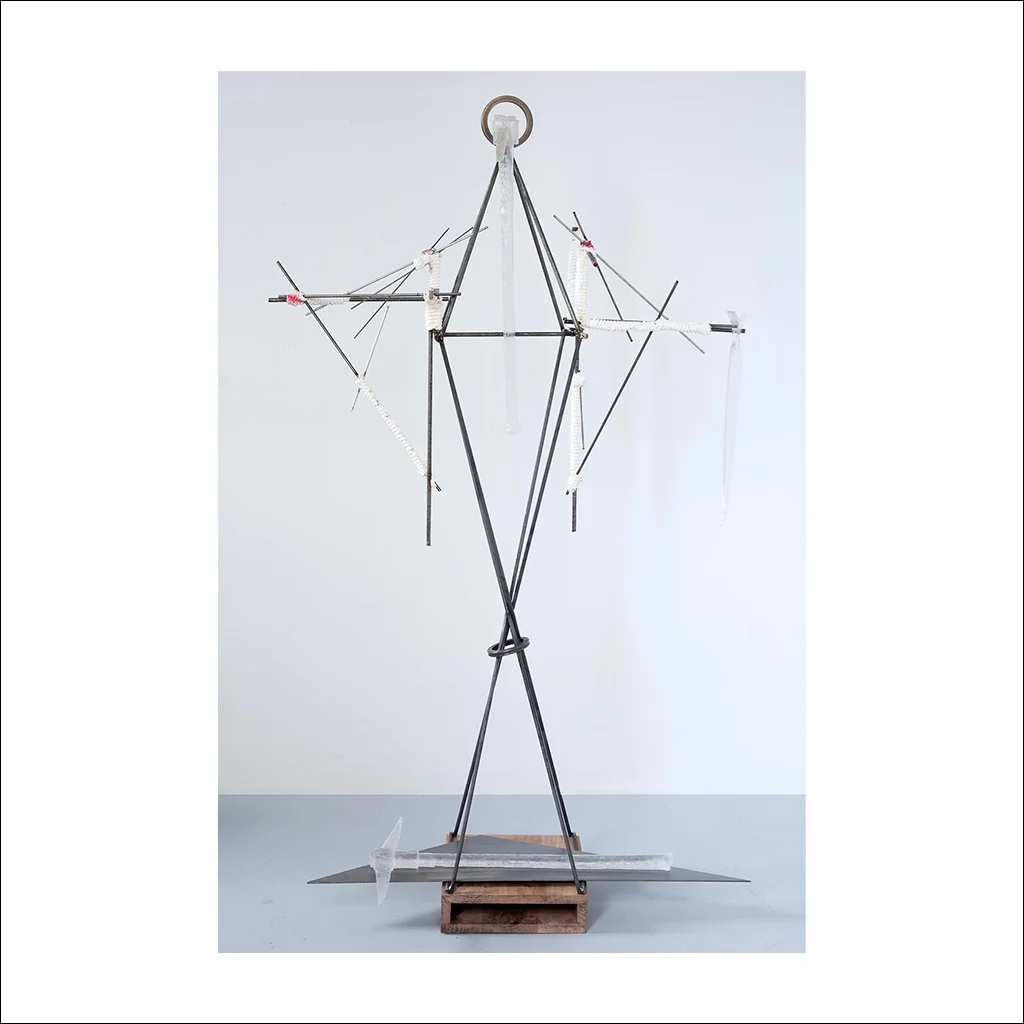
Steel, plaster, fishing line, resin, ice, thread, wood
183 x 104 x 43 cm
C.A.G.E. is a body of work that brings together a film and a series of subsequent sculptures. Each work is a different iteration of Evans’ relationship to landscape, material, and the structure of meaning. Across the works, environments are not simply depicted but processed—recorded, translated, and re-built through physical and conceptual systems. Natural forces, industrial structures, and cultural histories are collapsed into forms and narratives that oscillate between the geological and the psychological. The work explores states of transmission: from landscape to sound, from sound to structure, from structure to materials, from materials to the earth, and from the earth back into the body—tracing how meaning is organised, distorted, and remembered.
In 2012, Evans spent a month travelling through the south-western United States in a camper van. He had spent the previous year writing the script for C.A.G.E., a personal, fictional work about how an artwork is constructed—how a structured narrative becomes an imaginative system, and how that system operates as a metaphor for how a work exists in the world, and how its maker becomes attached to it, sometimes in darker ways. In this case, the focus is the making of an experimental sound work.
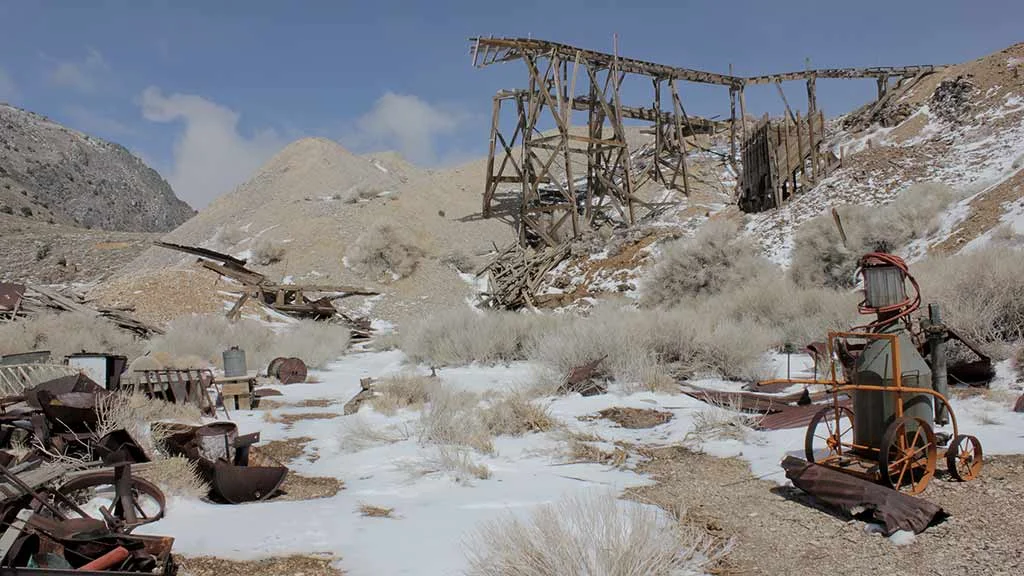
After completing the text, Evans researched geographical sites that could echo and extend it. He travelled through Zion, Death Valley, Utah, Nevada, and California, focusing on ghost towns, disused mines, and specific rock formations. He recorded footage on location, organising material in a makeshift editing setup inside the van, before returning to his studio in Brooklyn to assemble it around the text. The text was then reworked in response to the images, which functioned as a kind of storyboard, while the images themselves were selected and shaped by the evolving narrative. The film developed through this reciprocal process, where image and text were continuously altered in relation to one another.
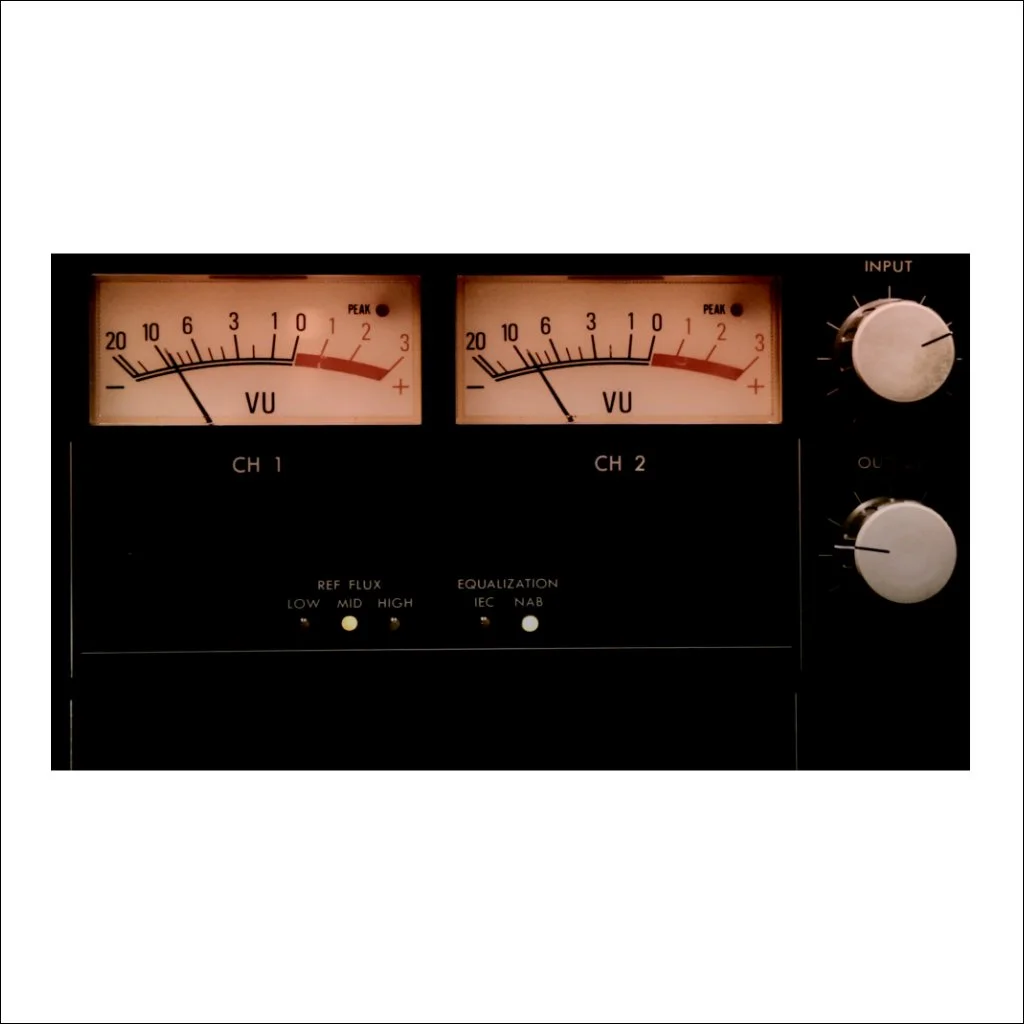
This process is mirrored in the narrative of the film itself. C.A.G.E., a 20-minute HD video narrated by Sam Andoe, takes the form of a fictional documentary centred on Variations on a Plain Index, a 1945 sound work by an unnamed experimental composer. The composer records wind in a dead forest in Capitol Reef and replays it inside disused mine shafts in Death Valley. These shafts function as physical recording channels, transforming sound into a spatial and material imprint of their internal structures. The soundtrack is re-recorded inside these mineral pipes with strange, horrific, bodily consequences.
The structure of the work follows a recursive system described in the film as the ‘family tree score’, where recordings are paired, re-paired, and reduced until a single final track remains. This sound is then encased and presented as a physical object, a compressed artefact of landscape, process, and memory.
The sculptures extend this system into three dimensions. Steel armatures function as skeletal frameworks onto which organic and industrial materials are arranged, producing forms that are at once architectural, geological, and organic. Materials such as wax, salt, leather, and coir act as carriers of texture and memory, translating specific sites into condensed physical objects.
Conglomer8 is a balancing structure composed of interdependent steel elements, forming a vertical, tree-like arrangement. A looped, inverted video of water moving through Zion’s Narrows Canyon is embedded within the sculpture on a car headrest monitor, reversing the flow of the river and introducing a tension between movement and weight. The structure operates as a grounded, inverted mobile, where each element is held in a state of precarious equilibrium.
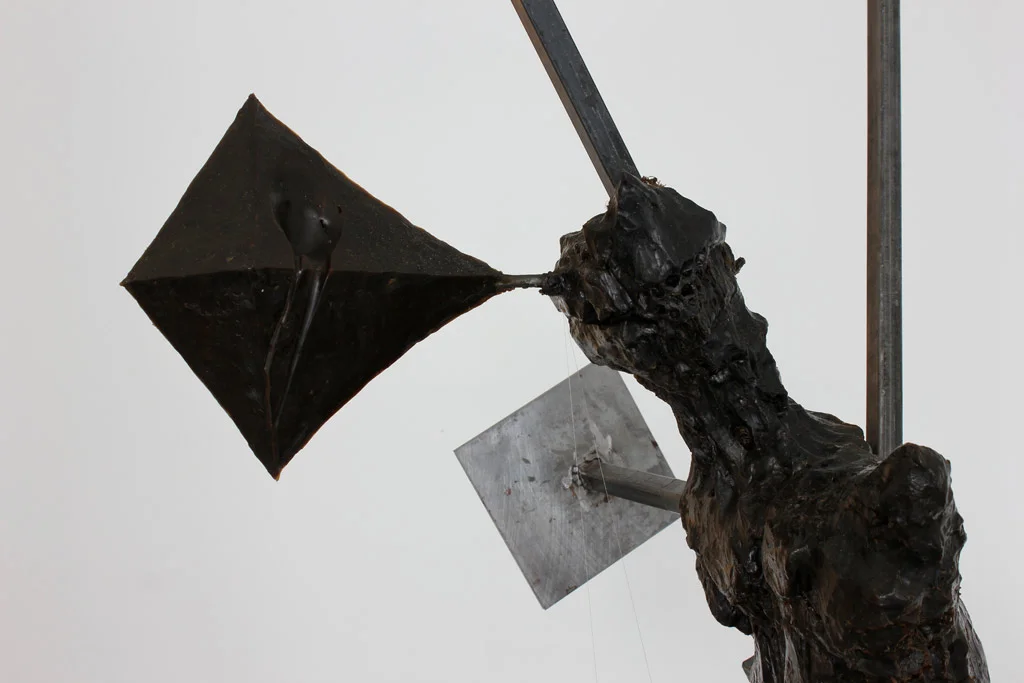
In tik_tik, the dichotomy between landscape and body becomes the primary subject. Forms derived from Navajo sandstone formations observed in Zion are sculpted in wax over stitched upholstery coir, stretched across a minimally figurative steel frame. The structure stands on steel legs and reads as a skeletal, loping figure, where armature, fibrous mass, and waxen surface construct a hybrid between figure, animal, and terrain. Here, landscape is internalised and reconfigured, shifting from an external site into a kind of skin—organic, fragile, and constructed.
Minimalism runs throughout the work, both in structure and sound. References include guitarist John Fahey, composer Robert Ashley, Brian Eno’s On Land, and land artists such as Robert Smithson and Walter De Maria. This emphasis on reduction, repetition, narrative, and exposed industrial materials informs the construction of the sculptures as single objects built from multiple strands, where material, structure, and idea are bound together.
bad.water draws directly from Badwater Basin in Death Valley, the lowest point in North America. Salt collected from the basin is embedded into wax and suspended within a steel framework, while guitar strings—used in the soundtrack—bind the form under tension. Plexiglas elements introduce a secondary, instrumental logic, sitting somewhere between the body of a guitar and a transparent echo chamber. The work compresses industrial, acoustic, and structural elements into a framework that is both symbolic and material.
During his travels through the American south-west, Evans visited a number of ghost towns, including Calico, Skidoo, and Cerro Gordo. These sites—abandoned, eroded, and suspended between preservation and collapse—formed both the atmospheric and conceptual foundation for the sculptural works that followed, particularly Kayaköy.
While both the American desert ruins and the village of Kayaköy stand as monuments to human abandonment, they emerge from different forces of erasure. Ghost towns such as Calico, Skidoo, and Cerro Gordo were abandoned once their raw materials were exhausted, collapsing after the depletion of their resources. In contrast, Kayaköy was emptied through forced geopolitical intervention during the 1923 population exchange between Greece and Turkey, representing a community severed by the redrawing of borders rather than ecological decline. Despite these different trajectories, both sites retain the trace of lost cultures, functioning as residual structures through which absence is made visible.
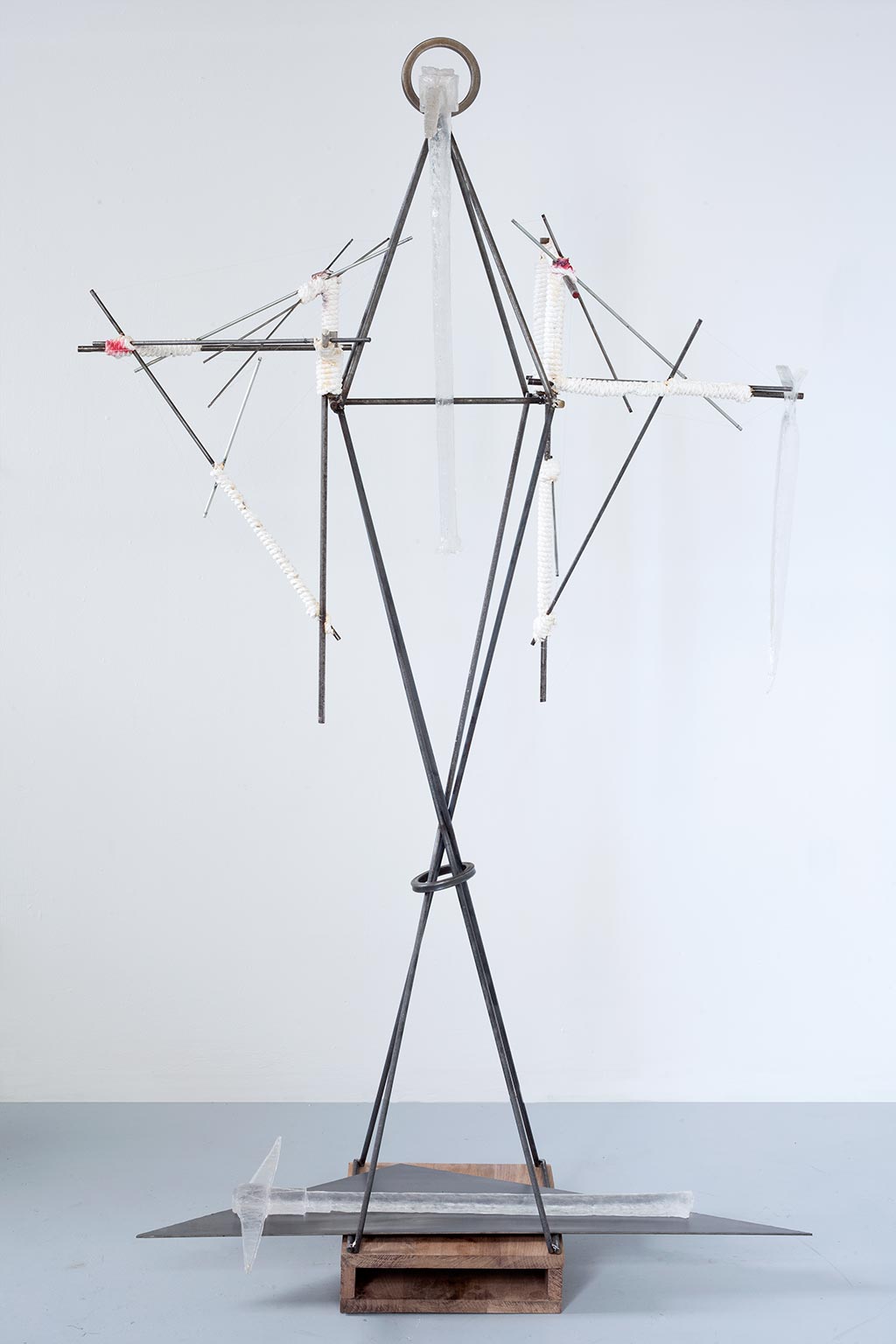
This condition of abandonment and structural residue finds its clearest manifestation in Kayaköy. Based on the Greek ghost town visited by Evans in 2010, the work draws a parallel between geographically distant but conceptually aligned sites of displacement.
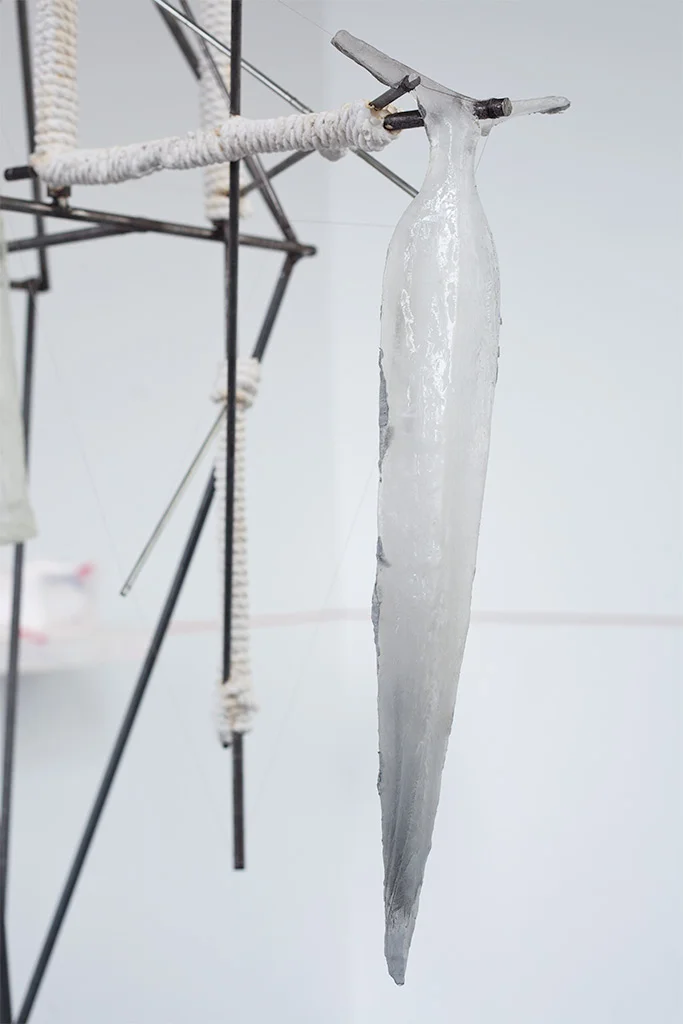
The sculpture consists of a steel frame from which cast artefacts are suspended, connecting mining tools to archaeological forms. A resin pickaxe lies on the ground, while another hangs above. To the side, a Corinthian sword cast in ice is held within the structure.
The ice sword melts over the course of the day and is replaced the following morning. As it diminishes and disappears, the work establishes a repeated condition of loss—linking the exhausted landscapes of the American West with the erased histories of Kayaköy. Here, structure remains, but what it once held is continually lost, producing a form defined not by permanence, but by its ongoing disappearance—much like the composer’s final work in the film: a convergence of elements reduced to a single recording, sealed and left to play indefinitely, locked away in a disused power station at the edge of the desert.