ANTENNAS
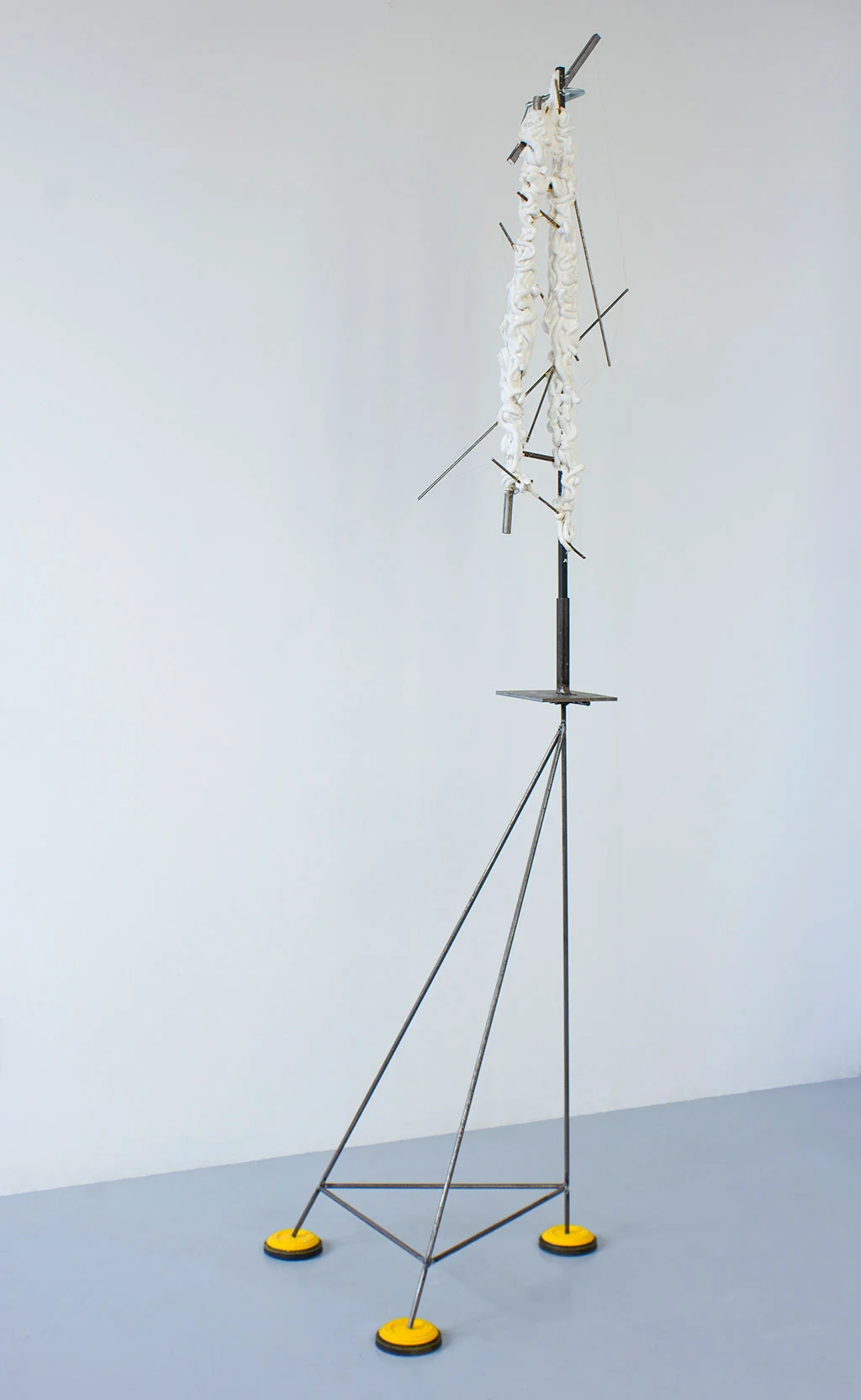
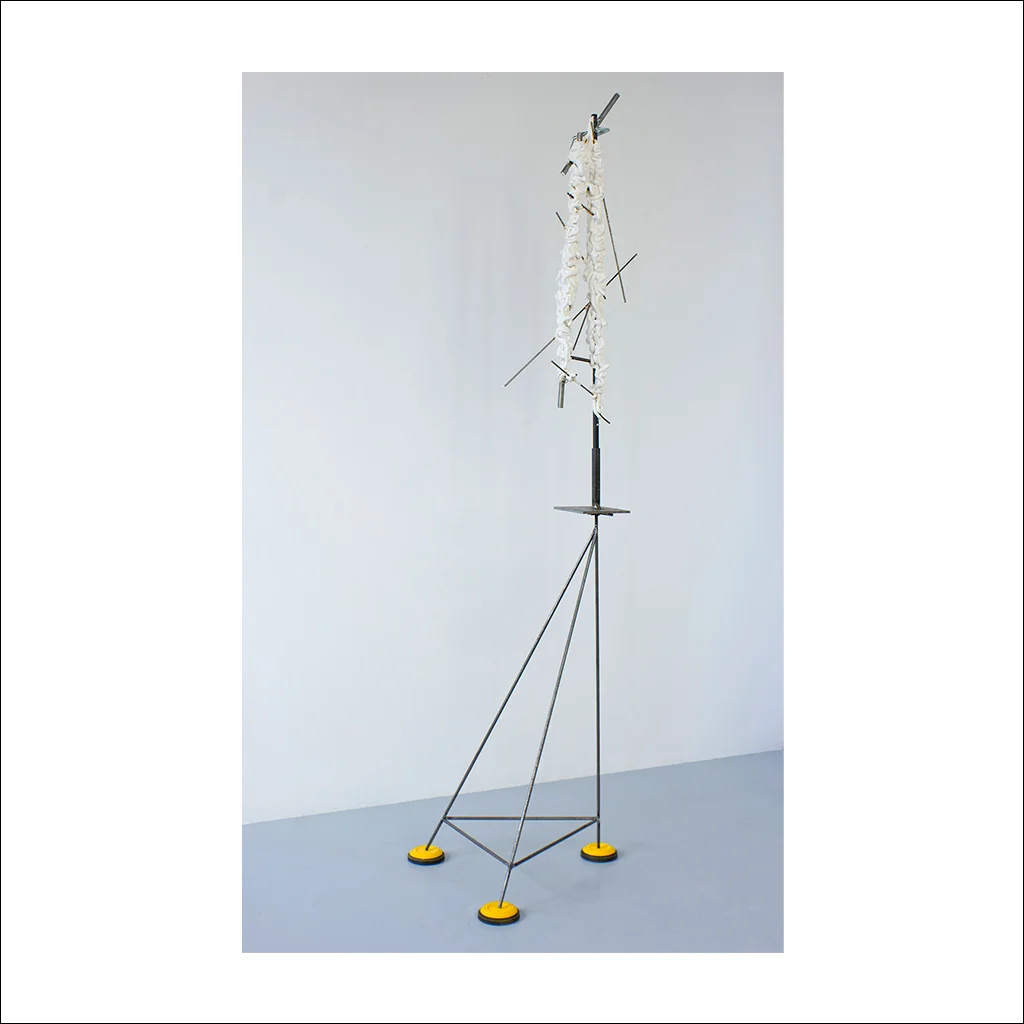
2015
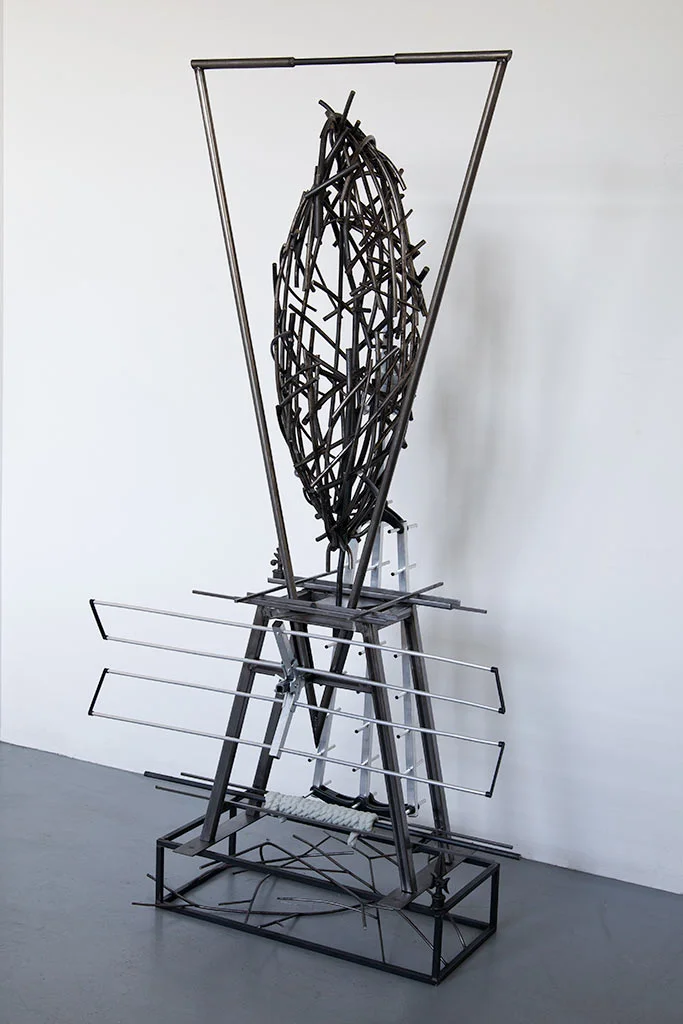
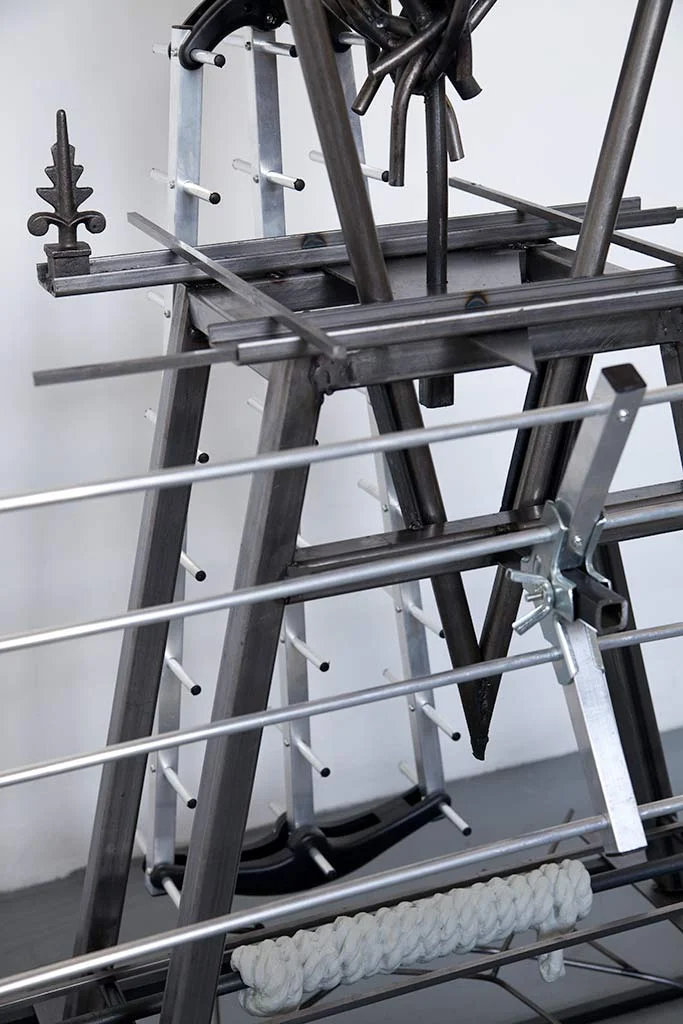
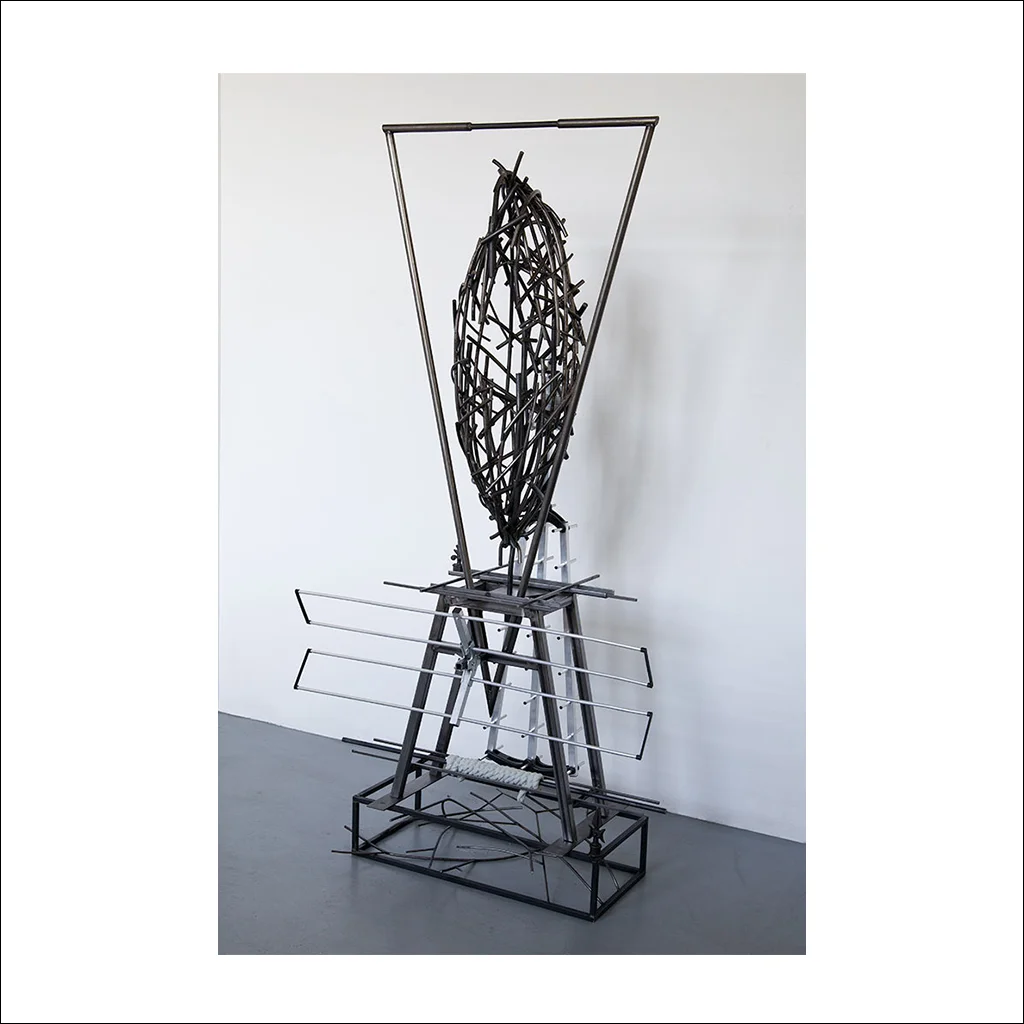
Steel, TV antennas, resin, rope, lacquer, wax
178 x 94 x 53 cm
2016
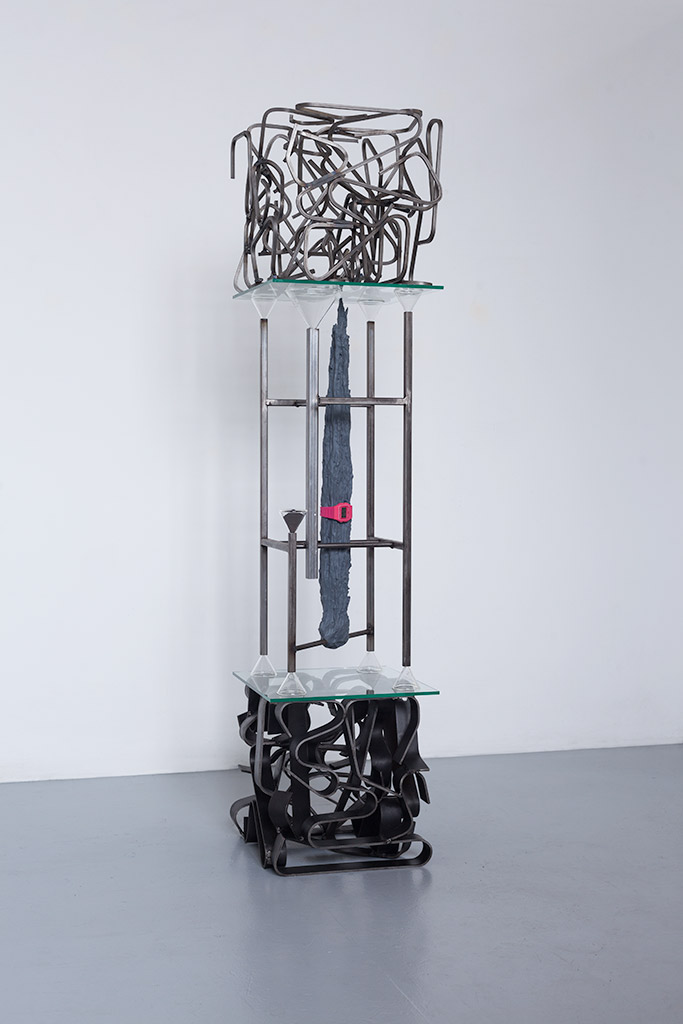
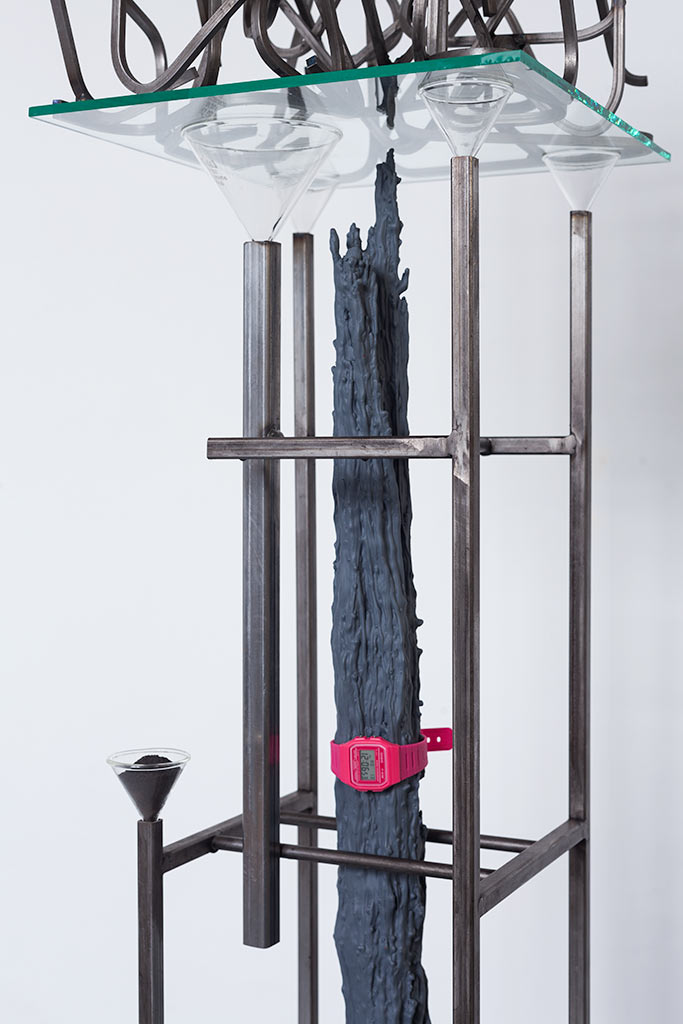
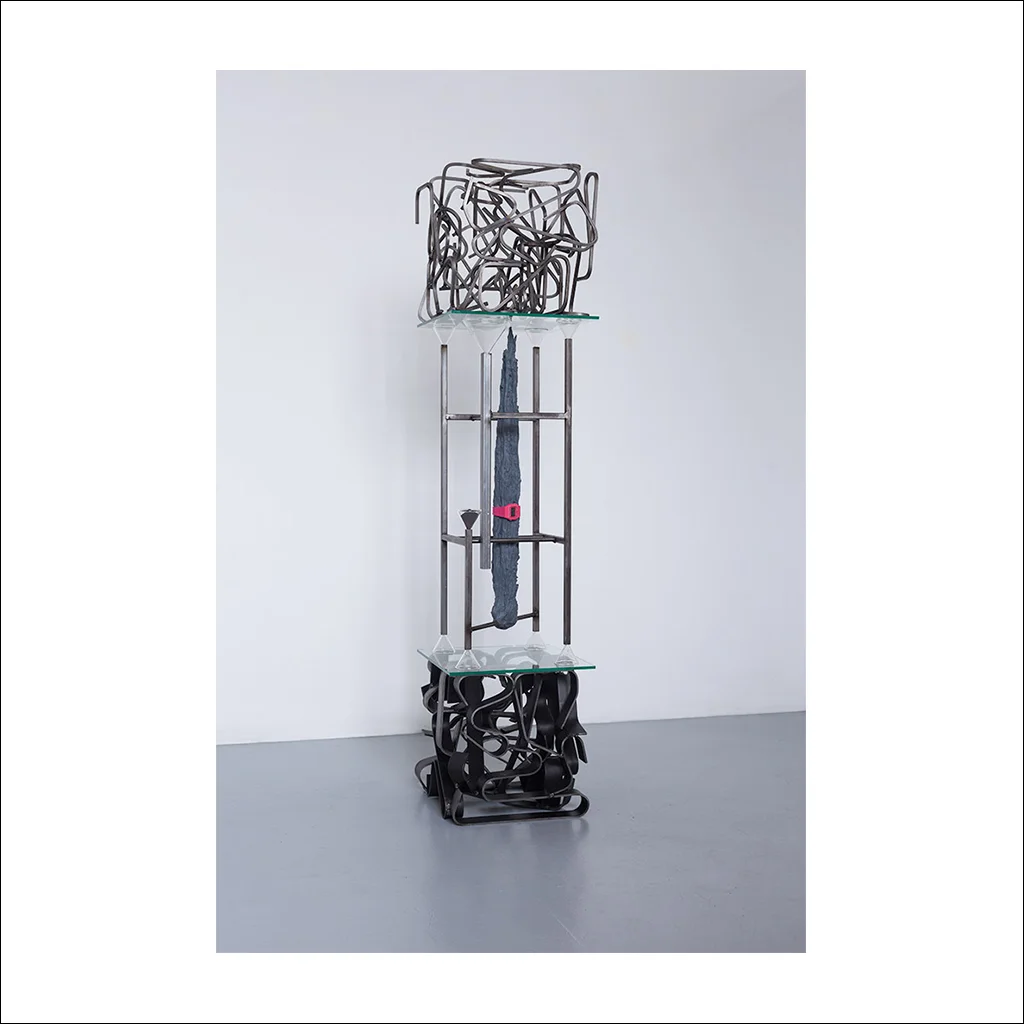
Steel, glass, watch, iron filings, resin, paint, lacquer, wax
132 x 30 x 30 cm
2013
Steel, plaster, fishing line, thread, clamp, skeets (clay pigeons), lacquer, wax
203 x 40 x 40 cm
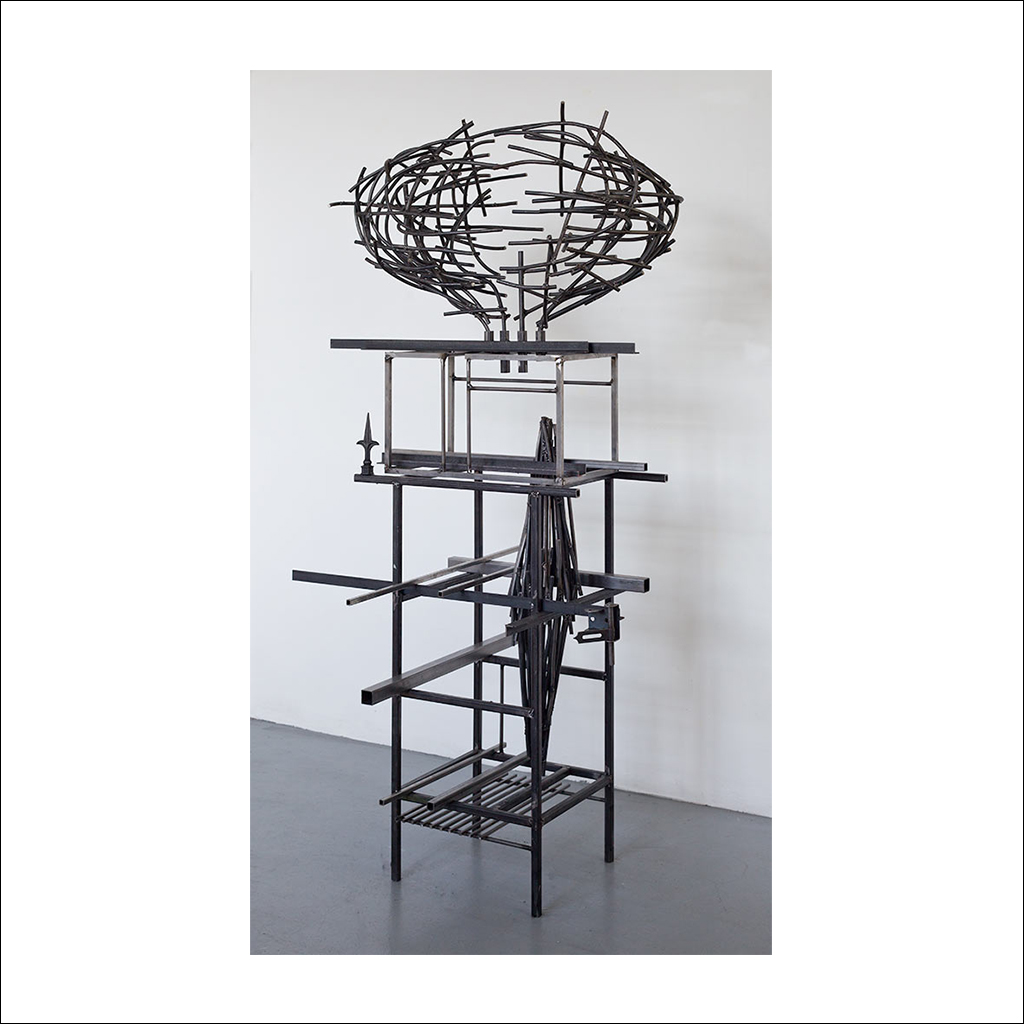
2015
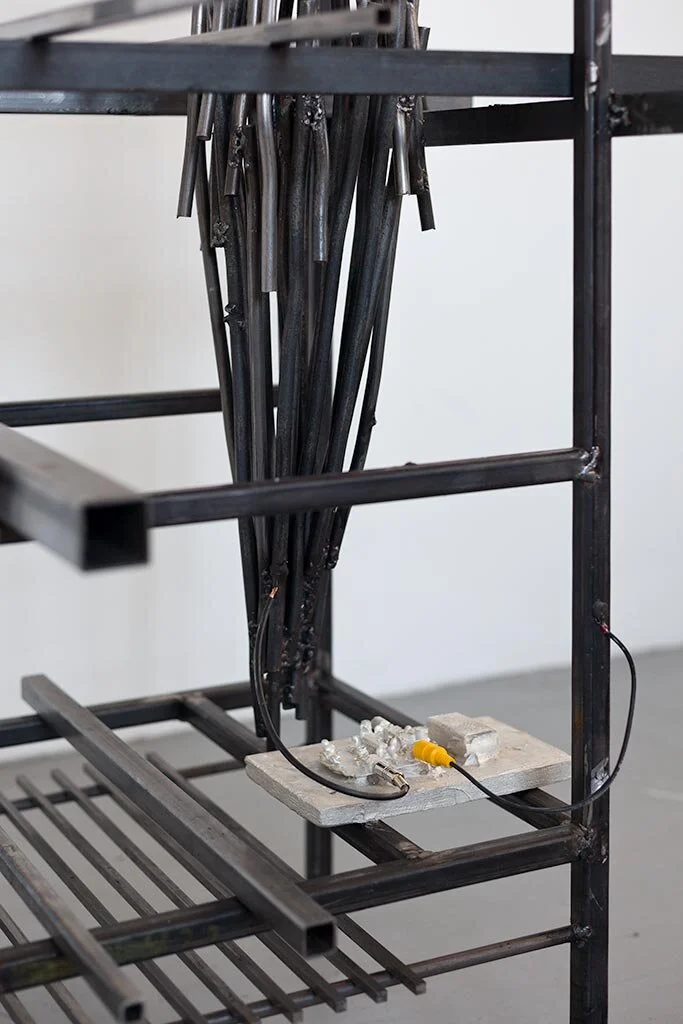
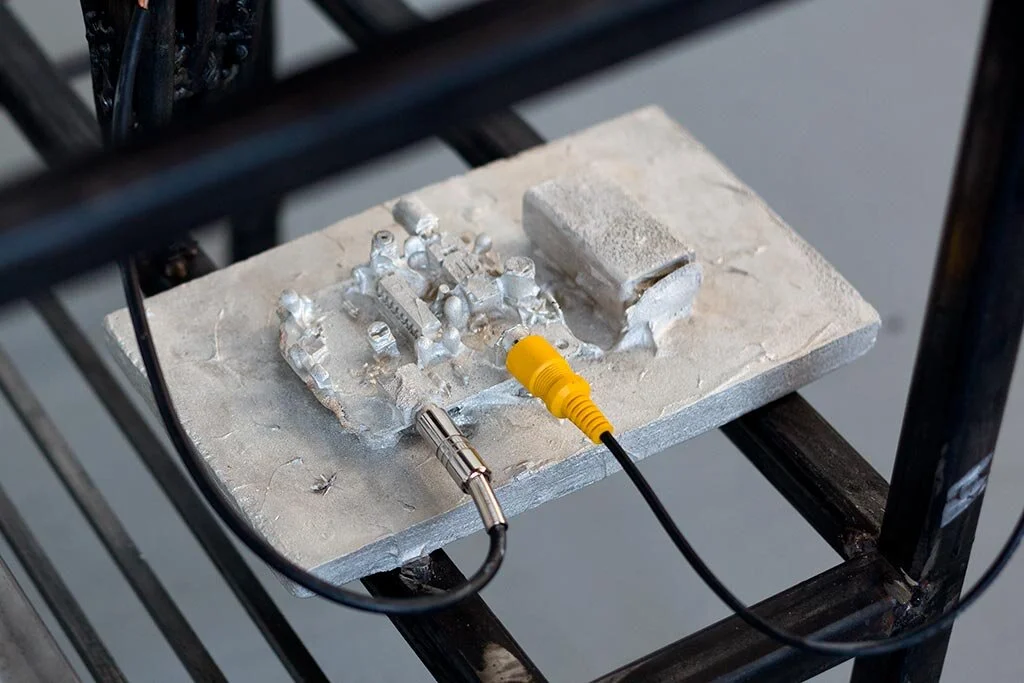
Steel, pewter, audio cables, lacquer, wax
180 x 91 x 81 cm
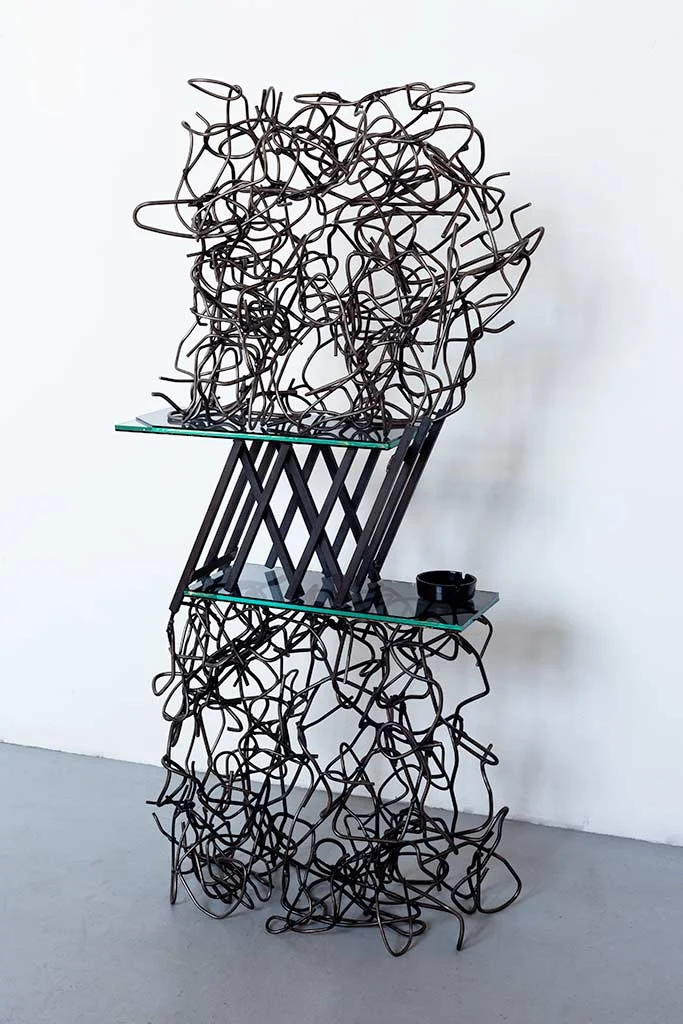
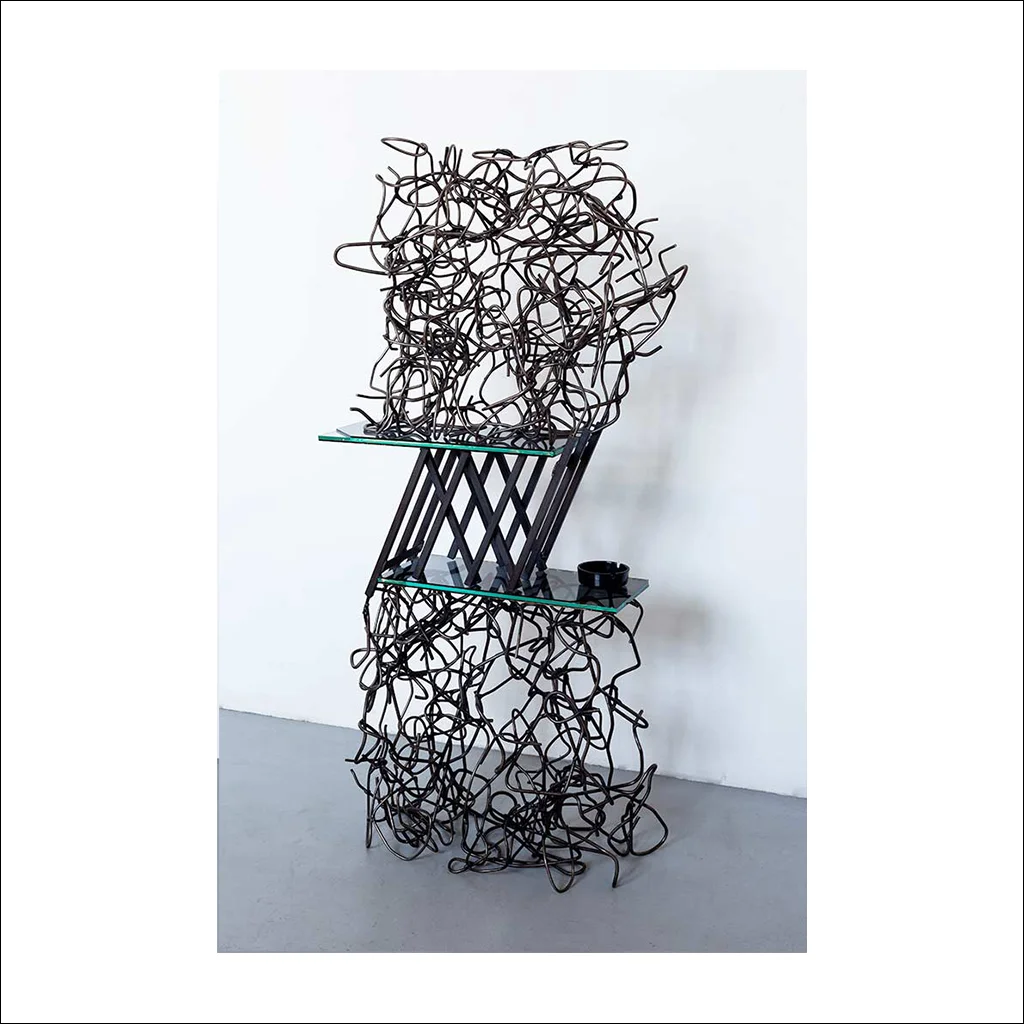
2015
Steel, glass, cigarette, lacquer, wax
123 x 54.6 x 26.6 cm
2015
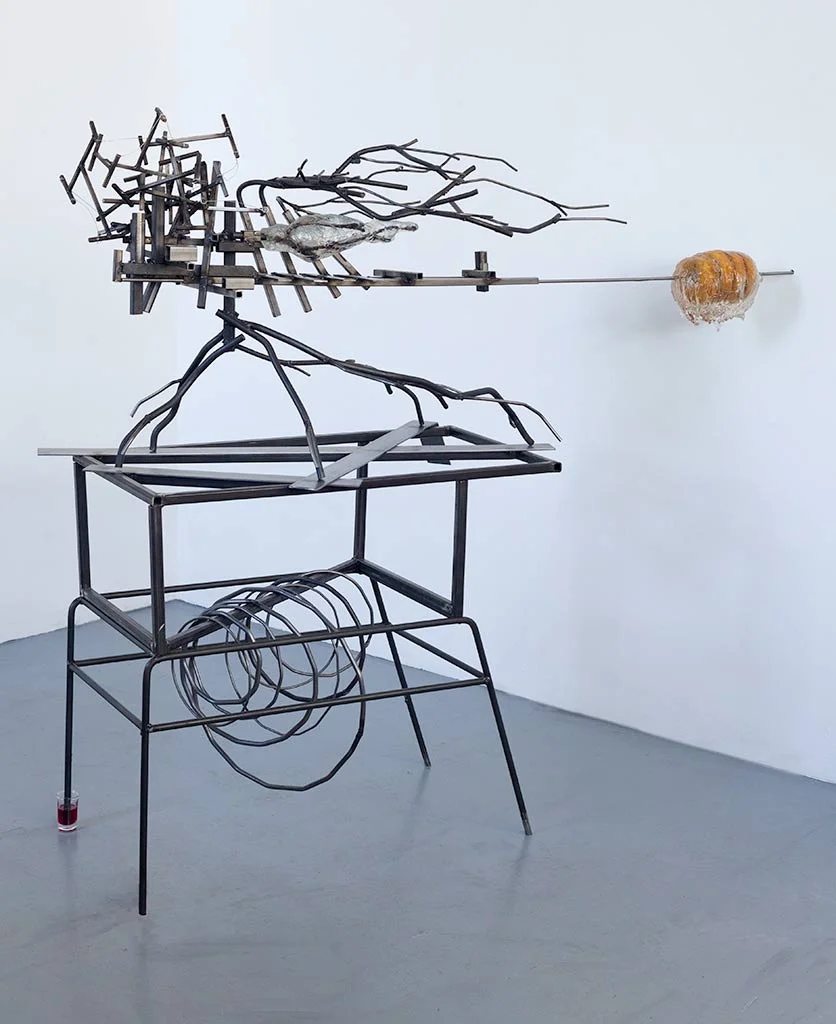
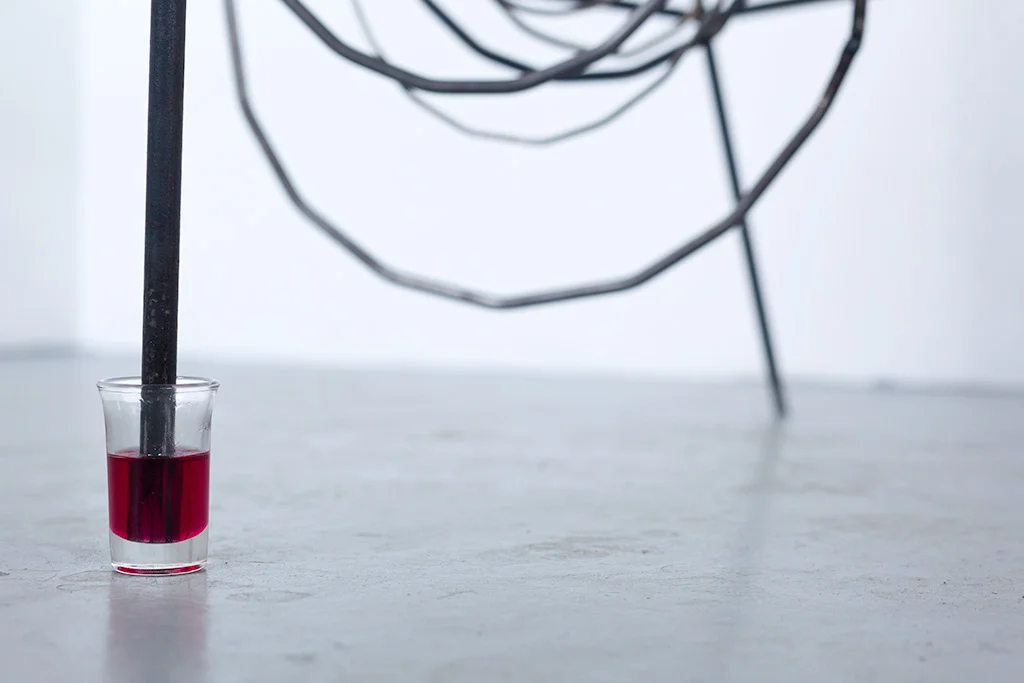
Resin, steel, solder, doughnuts, glass, pigment, lacquer, wax
134.6 x 61 x 58.4 cm
The Antennas series gathers six sculptures created around shared ideas of transmission and reception. Each work employs steel rod to evoke the invisible currents—technological, cultural, and spiritual—that shape human experience. At its core, the series explores belief and the limits of communication, tracing the tension between aspiration and limitation, desire and reception, through contrasts of industrial and domestic materials.
The series draws on antennas across time and cultures. The Green Bank Observatory in West Virginia, home to the world’s largest fully steerable radio telescope, embodies humanity’s drive to scan the cosmos for interstellar signals. As the birthplace of modern SETI (Search for Extraterrestrial Intelligence), it remains a crucial site for hunting “technosignatures”—signals that might reveal advanced civilizations. Yet its unintended functions—a quiet refuge for electromagnetic hypersensitivity sufferers and a haven for low-tech local living—offer a gentle counterpoint to grand designs, a quiet silver lining to ambition.
In Slavic tradition, wooden altars serve as the sacred heart of the kapishte, carved from “holy” timber such as oak or linden to act as living conduits for deities like Perun or Veles. Tall pillars, or kumiry, once marked secluded groves or hilltops, the boundary between the mundane and the divine. These altars guided offerings of bread, honey, or mead, extending into domestic spaces through the Red Corner, where heirlooms and embroidered cloths created a permanent site of veneration. Like radio telescopes, these wooden forms function as metaphoric antennas, transmitting and receiving beyond the immediate, signaling individual existence and identity.
Industrial infrastructure and folklore further inform the work. Electricity pylons, towering over landscapes, have inspired superstition and paranormal belief. Many link pylons to invisible electromagnetic forces (EMF), suggesting spirit energy, EMF-induced hallucinations, or the “Hitchhiker Effect,” in which people are thought to attract supernatural entities. These unseen currents provoke human interpretation, anxiety, and myth-making, echoing the unseen transmissions the sculptures seek to render visible.
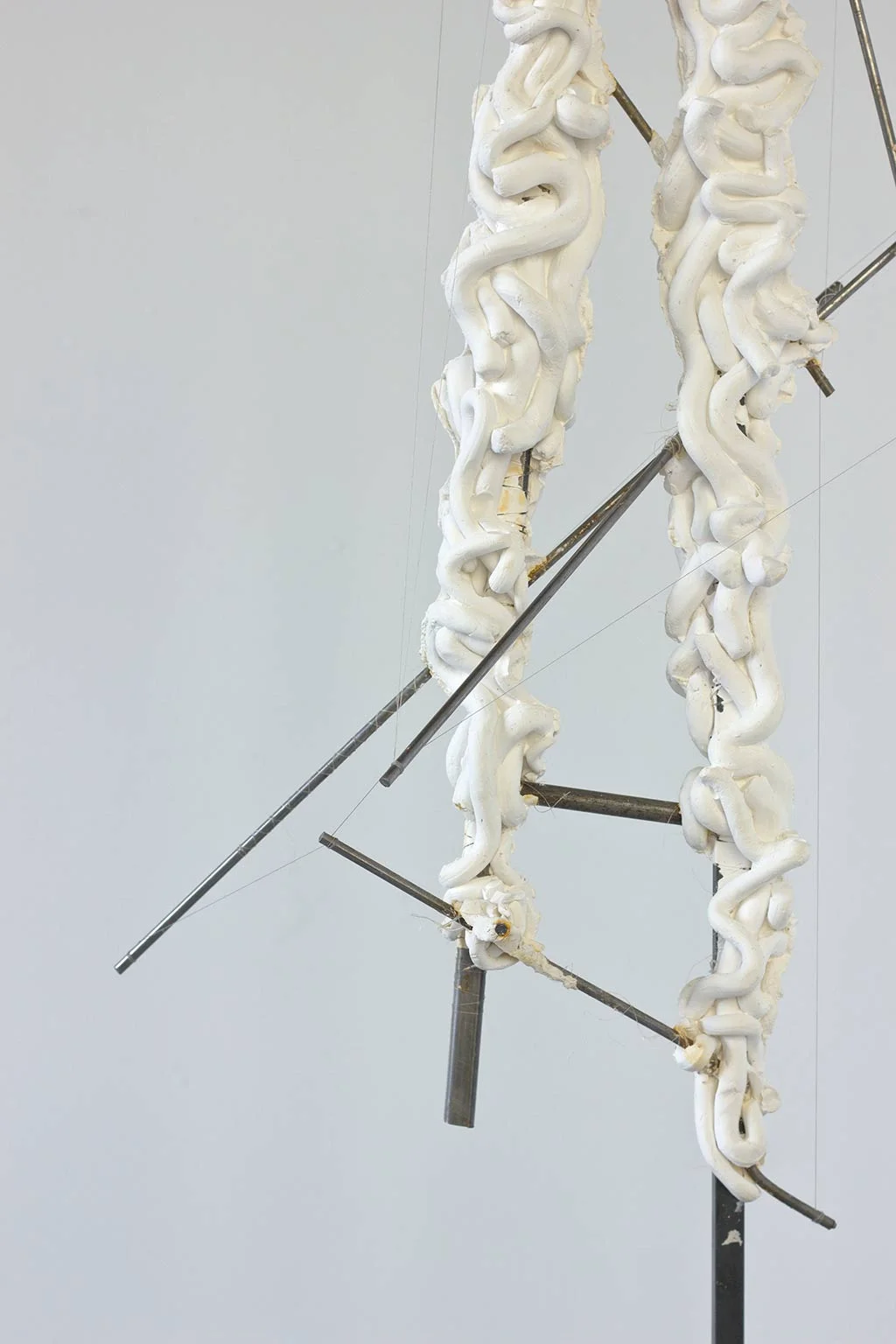
Rooftop television antennas, referenced directly in works such as Antenna, converge sacred geometry with functional design in an almost figurative arrangement. At the sculpture’s heart, a resin-cast rope—seemingly holding the structure together—extends its life while removing the rope’s function, a quiet ritual of preservation and obsolescence.
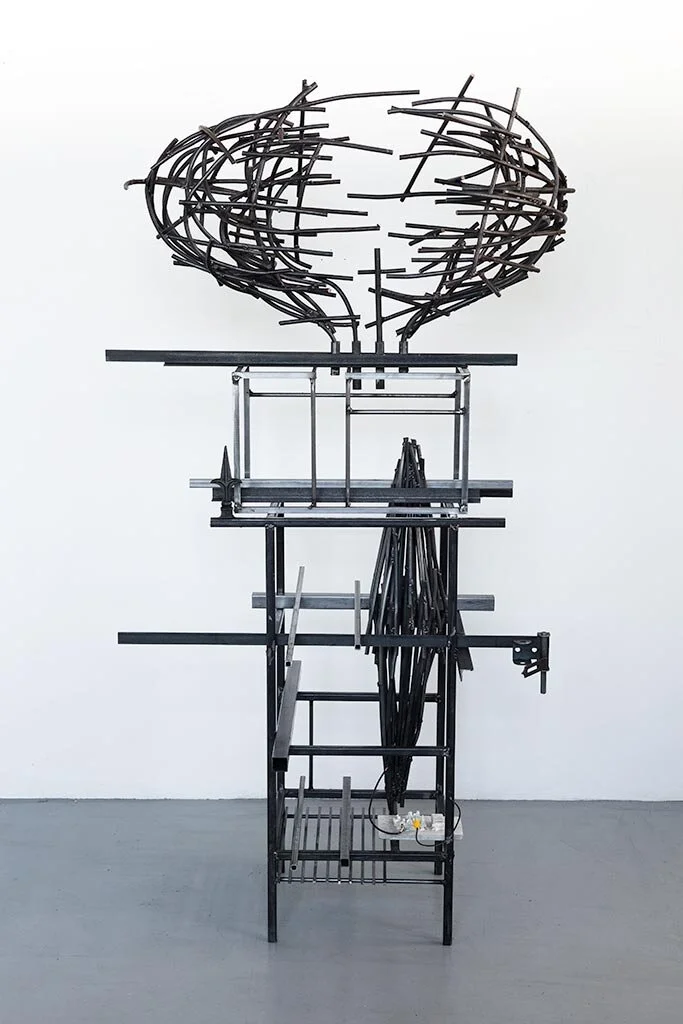
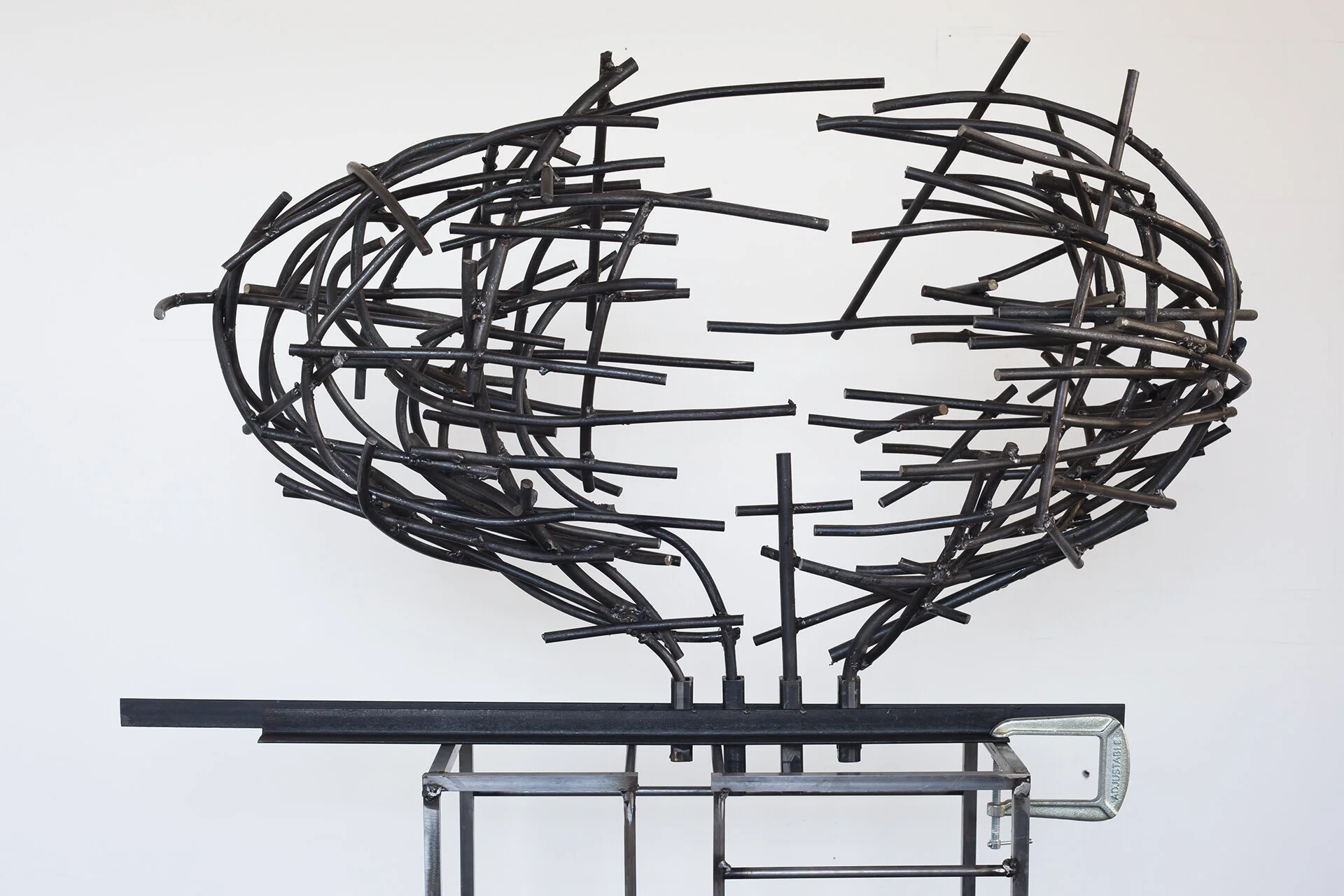
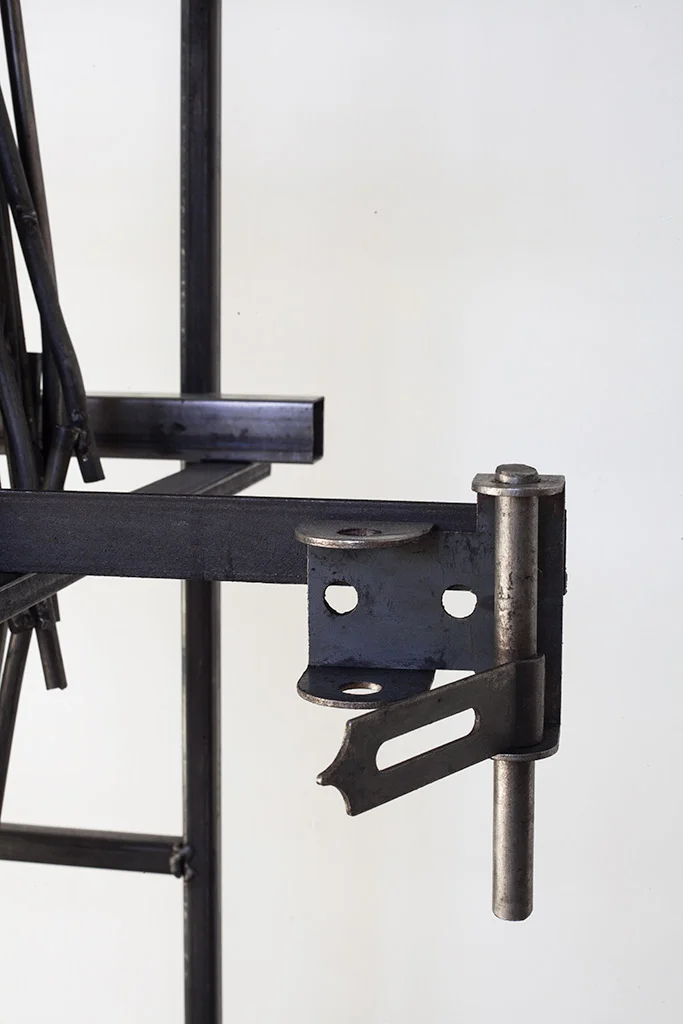
Steel frameworks, raw yet waxed, reference and distort modernist conventions, twisting, bracing, and entangling under tension that evokes physical and psychological struggle. Unlike Anthony Caro’s formalist steel works, which focus on relational abstraction, these sculptures integrate objects—TV antennas, ashtrays, gate fragments, doughnuts, digital watches—as cultural and psychological content, grounding abstraction in domestic and urban life.
The works are spatial and temporal experiences, extending into the viewer’s environment and requiring movement to apprehend relationships between elements. Steel acts as both support and staging device, closer to furniture or a shop window than autonomous forms. Objects suggest habit, desire, cycles of broadcast and ingestion, and the tension between elemental technology and everyday consumption. Surrealist dislocations produce unstable narratives around ritual, material production, and industrial power.
Individual works exemplify these dynamics. In Zzand (2015), an ashtray precariously rests on a glass pane sandwiched between twisted steel cubes; a lipstick-stained cigarette butt marks human presence, social ritual, or perhaps just a private view left over. Gate (2015) features an inert cast pewter radio, visually broadcasting domestic familiarity, plugged in and alive only in the world of the artwork. A Lake is Divided by a Bridge (2016) balances two steel figures on a glass plane supported by funnels of iron filings, merging precision and fragility, turning a scientific experiment into narrative contemplation. Doughnuts (2015) layers magnets, furniture coir, steel, and doughnuts cast in resin, contrasting elemental steel with engineered consumer objects; part insect, part robot, it pins itself to the wall by a rod, suggesting an injection of energy or a daily dose of Dunkin’ indulgence.
The series explores cycles of push and pull, attraction and repulsion, broadcast and ingestion, and the interplay between industrial foundations and domestic habits. Steel’s raw surfaces anchor the works in modernist tradition, while the objects carry cultural, psychological, and domestic resonance, humanizing abstraction and prompting reflection on the signals we transmit, receive, and consume.
Finally, the series confronts failure and obsolescence. The collapse of the Green Bank telescope in 1988 reminds us of the limits of reception and the fragility of grand ambition. Looking toward the horizon from almost any rooftop in New York, the casual visitor does not see towering skyscrapers as Hollywood might promise, but abandoned television antennas. Scattered like gravestones, stripped of wires and function, they stand like skeletons frozen in daylight, perhaps waiting to be reanimated by nightfall. These inert structures signal humanity’s inability to communicate with the ether: no matter the ambition, sophistication of objects, or depth of ritual, the human condition remains tethered to unreceived messages, silence, and absence.
Through steel, objects, and form, the Antennas series renders visible the invisible networks of broadcast, consumption, and spiritual or cultural signal that define contemporary life, juxtaposing industrial material and domestic experience, technological ambition and habitual passivity, aspiration and existential malaise.